Common Orthodontic Issues
4/29/2024
The primary motivation behind the decision of both children and adults to pursue orthodontic treatment often stems from issues concerning their oral health or dental alignment. These concerns may vary from minor inconveniences to significant discomfort. Below, we’ve outlined prevalent orthodontic issues that serve as signals for the necessity of seeking professional care.
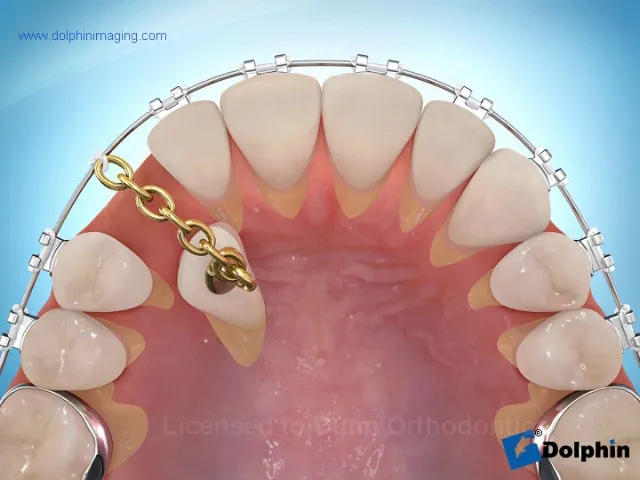
Impacted cuspid with palatal treatment
An impacted cuspid, also known as an impacted canine or eyetooth, is a tooth that is stuck and cannot erupt into its proper position. The maxillary cuspid, or upper eyetooth, is the second most common tooth to become impacted.
Crowding of the teeth
Patient started treatment at age 11 and wore braces for 18 months. He loves his new smile.
Open bite – Front teeth don’t touch
Patient sucked her thumb as a young child. She started treatment at age 13. She had braces and a special appliance — called a crib — to retrain the tongue, for 24 months. Now she can bite the lettuce out of a sandwich.
Deep overbite – Lower front teeth bite into palate
This adult patient, age 25, required clear aligner treatment to correct his severe overbite, with treatment taking 18 months.
Missing lateral incisors
This patient’s lateral incisors were congenitally missing. She had braces for 20 months to move the teeth into their correct positions, then the missing teeth were replaced with bonded “Maryland” bridges.
Underbite – Lower front teeth in front of upper teeth
Patient’s underbite was causing her jaw joint discomfort and excessive wear patterns on her teeth. After about 16 months of treatment starting at age 32, she now finds smiling and chewing much easier.
Spacing of teeth
Patient was bothered by the spaces between his teeth. Clear aligners closed the spaces and gave him an ideal bite in 12 months. Special glued-in retainers help keep the spaces closed.
Overjet – Protruding front teeth
At age ten, patient had a big overjet with the top teeth protruding beyond the bottom. She had two phases of treatment. The first helped her jaws to grow more harmoniously and the second aligned her teeth and bite. At age 13, she was proudly displaying her new smile.
Non-braces treatment
Sometimes braces are not needed to get noticeable improvements in tooth alignment. This patient was first seen at age seven for crowding of the lower permanent teeth. A procedure was performed to reduce the width of the adjacent baby teeth and the permanent incisors aligned on their own in nine months.
Phase-One
Patient’s parents were concerned about both aesthetics and the health of the erupting permanent teeth when they brought him to the orthodontist at age eight. The lower front teeth were crowded and touching the palate, and the upper front teeth were extremely displaced from their normal positions. After 12 months of Phase-One treatment with an expander and partial braces, patient’s appearance and dental function were vastly improved.
Recent Posts
Advanced Technology for a Better Experience and Results
Digital X-rays, CT scans, and impressions provide faster, safer, and more precise imaging for accurate, comfortable orthodontic treatment.
Digital Imaging with the iTero® Element™
The iTero scanner creates fast, accurate 3D digital impressions, improving comfort and helping visualize your future smile before treatment.
Explore Invisalign® Treatment
Invisalign offers faster, comfortable, and nearly invisible teeth straightening with removable aligners and fewer office visits.

